Showing posts with label Smith. Show all posts

Saturday, June 8, 2024

NEW LETTER TO THE FINANCIAL TIMES

AM | @agumack

"Interest is raised by defective enforcement of contracts" — Adam Smith

Once again I'm grateful to the Financial Times for publishing my letter on Adam Smith, interest rates and the performance of contracts. Previously published letters include: "Freedom to trade at odds with despotic ambitions" (21 March 2022), "Perón quip is chilling take on Latin American justice" (9 April 2021), "A sound economy needs judicial independence" (19 November 2019).

Last week's letter was a brief comment on a previously published missive by Pete Vatev regarding the importance of institutions to ensure "strong creditor protection rights". This is one of my particular hobbyhorses. A large part of my blog Contrapesos is devoted to that idea.

In one of my favourite exercises in Quellenforschung, I have traced it all the way back to François Bernier (1, 2, 3), Trenchard and Gordon (1, 2), Montesquieu (1, 2), Ferdinando Galiani (1, 2, 3), Guillaume-Thomas Raynal (1, 2), Adam Smith (1, 2, 3, 4, 5) and Jacques Necker (1, 2).


* * *

Here's the text

Pete Vatev makes a strong case as he argues that “creditor protection rights contributed to lowering the risk of lending” (“Florentine bankers knew all about the pricing of risk”, Letters, May 29). It is worthwhile to mention that Adam Smith made exactly this point almost 250 years ago.

In Wealth of Nations we read that “interest is raised by defective enforcement of contracts”. Thus, a “high rate of interest” is to be expected when governments neglect the duty of setting up strong courts of justice. Smith explained that the premium paid by investors as they buy government-issued securities reflects “the universal confidence in the justice of the state”.

He went a lot further in Book IV, arguing that, more than trade policies, differences in economic prosperity reflect an “equal and impartial”, as opposed to an “irregular and partial”, administration of justice.

Agustin Mackinlay
Barcelona, Spain
______________

Sunday, August 21, 2022

¡PROCOPIO SUPERSTAR!

AM | @agumack

"... sa source principale est Procope" — Catherine Volpilhac-Auger

Mis investigaciones sobre las fuentes de Montesquieu me llevan a un autor fascinante: Procopio de Cesarea, Προκόπιος ὁ Καισαρεύς (c. 500 – 565). Montesquieu es muy transparente con la mayoría de sus fuentes. Lo que no veo en la literatura secundara es un estudio de cómo el autor de Esprit des lois utiliza el enorme material que ofrece Procopio, más allá de la descripción general de los efectos del gobierno despótico.

Catherine Volpilhac-Auger, editora de Montesquieu y autora de dos artículos sobre la influencia de Procopio [1], no muestra interés por asuntos económicos. Dos de sus brillantes colegas, Céline Spector y Catherine Larrère, se han encargado de descifrar al 'Montesquieu economista' [2]. Pero no se ocupan de lo que en Contrapesos llamamos la 'teoría institucional' del crédito de Montesquieu. Y es precisamente en este punto que mis investigaciones aportan novedades.

* * *


Los libros de Procopio constituyen la fuente más importante sobre el emperador bizantino Justiniano I (527 – 565). Procopio escribe una historia 'oficial' de las guerras de Justiniano y su general Belisario, y una Historia secreta Ἀπόκρυφη Ἱστορία, Apókryphe Historía — a veces conocida como 'Historia arcana' o 'Anécdotas' tras la publicación del libro en latín, en 1623, por Niccolò Alemanni. Montesquieu cita las dos historias [3].

La Historia secreta describe sin tapujos y con lujo de detalles el calamitoso des-gobierno de Justiniano. Un personaje destaca en esta crónica despiadada: la emperatriz Theodora, descrita como prostituta de alto vuelo. Procopio la acusa de utilizar "sus tres orificios" para conseguir todo lo que desea — incluyendo una fortuna colosal. 

Control de la justicia y contracción económica
En pocas palabras, la 'teoría institucional' del crédito parte de la ausencia de separación entre el poder ejecutivo/legislativo y el poder judicial, lo que genera incertidumbre sobre el cumplimiento de los contratos. La consecuente contracción en la oferta de crédito lleva a tasas de interés 'usurarias' ya que la demanda se mantiene constante. Resultado: bajo nivel de actividad económica y comercial, crisis fiscal crónica, impuestos impagables y pobreza generalizada. 

Montesquieu utiliza la historia de Roma para ilustrar su teoría (ver: "Notas sobre Montesquieu: crédito y gobierno despótico", Contrapesos, abril 2022). Con excelente criterio, Volpilhac-Auger señala que el autor de las Considérations sur les causes de la grandeur des Romains et de leur décadence (1734) es el primer historiador en ofrecer un relato continuo de 'Roma' desde los primeros reyes hasta la toma de Constantinopla. De ahí el interés por Procopio.

* * *

Una fuente crucial en esta tarea es el historiador griego Dionisio de Halicarnasio, que describe en términos favorables el rey de Roma Servius Tullius y su voluntad de deshacerse de la facultad de juzgar en casos civiles. En Dionisio encontramos numerosas referencias al gobierno mixto y a los contrapesos institucionales, y a las ideas de πράος, ἐπιεικής y φιλανθρωπία que Montesquieu expresará en francés con los términos douceur y doux para significar indulgencia, clemencia, tolerancia, humanidad, caridad (ver: "Masacre en Teutoburgo y ... separación de poderes", Contrapesos, junio de 2022).

Procopio es todo lo contrario. En la Historia secreta dominan la ambición desmedida y la sed de poder, la corrupción y los males que genera, el control de los tribunales, el robo en gran escala, la avaricia, la mala fe, la venta de fallos, la inseguridad sobre la vida, la libertad y la propiedad. De manera crucial, encuentro en Procopio referencias —descuidadas en los análisis económicos de Montesquieu— a la incertidumbre sobre el cumplimiento de los contratos y a las altas tasas de interés que resultan del gobierno despótico. En próximas entradas publicaré material de la sensacional Historia secreta

[CONTINÚA...]

[1] Catherine Volpilhac-Auger: "Sens et fonction de l'anecdote chez Montesquieu", en Cahiers Saint-Simon, No. 23, 1995, pp. 33-39 y "Ex Oriente nox? Le paradoxe byzantin chez Montesquieu", en Dix-Huitième Siècle, No. 35, 2003, pp. 393-404.

[2] Catherine Larrère: "Montesquieu économiste? Une lecture paradoxale", en Catherine Volpilhac-Auger (ed.) Montesquieu en 2005 (Oxford: Voltaire Foundation, 2005), pp. 243-266 y Céline Spector. Montesquieu et l'émergence de l'économie politique. Paris: Honoré Champion, 2006.

[3] Procopii Caesariensis v.i. Anekdota. Arcana historia, qui est liber nonus Historiarum. Ex Bibliotheca Vaticana Nicolaus Alemannus protulit, Latine reddidit, notis illustrauit. Lyon, 1623.

_______________

Sunday, July 17, 2022

MONTESQUIEU: CRÉDITO & CONTRATOS

AM | @agumack

« Le despotisme naturalise l'usure » — Montesquieu

En el prefacio de la edición francesa de General Theory, John Maynard Keynes compara a Montesquieu con Adam Smith: “Montesquieu was the real French equivalent of Adam Smith.” Jean de Largentaye, el traductor, había propuesto inicialmente: « l'égal français ». Keynes no estaba convencido: “I did not mean to go so far as to suggest he was the equal of Adam Smith, at least so far as economics is concerned. (Taken as a whole, I would indeed reckon his work equal). I meant rather that, so far as economics was concerned, he was the equivalent of Adam Smith, that is to say, the comparable figure.”

Largentaye finalmente adoptó otra expresión: «… Montesquieu, le plus grand économiste français, celui qu’il est juste de comparer à Adam Smith ». La razón por la cual Keynes los considera comparables —pero no iguales— es, seguramente, porque hace referencia a la teoría 'monetaria' de Montesquieu en Esprit des Lois XXII.19. En palabras traducidas por Largentaye, Keynes alaba al francés por presentar «… l'idée que le rôle du taux de l'intérêt est de maintenir en équilibre, non la demande et l'offre des biens de capital nouveaux, mais la demande d'argent liquide et des moyens d'y satisfaire » [1].

* * *

No es mi propósito en este blog referirme a las teorías 'monetarias' y 'reales' de la tasa de interés en el siglo XVIII [2]. Lo intentaré seguramente más adelante. Solo deseo compartir la lectura de unos documentos contemporáneos que ayudan a entender otra vertiente del estudio de Montesquieu sobre el crédito y la tasa de interés, generalmente desconocida por los analistas, con la notable excepción de F. T. H. Fletcher [3].

Se trata, por supuesto, de la 'teoría institucional', largamente presentada en Contrapesos: en ausencia de lo que hoy llamamos independencia judicial, la oferta de crédito se contrae y las tasas de interés son 'usurarias' (1, 2, 3, 4, 5). Los documentos en cuestión fueron publicados en 1956 por Jean-Max Eylaud [4]. Se trata de archivos sobre centeneras de contratos de préstamos, arrendamientos y pagarés emitidos y recibidos por Montesquieu, un exitoso propietario de tierras y viñedos en la zona de Bordeaux.
 

Ésta es mi primera cosecha:

1. Los contratos de arrendamiento muestran que Montesquieu acepta pago en efectivo y en diferentes variedades de trigo. También acepta gallinas, huevos, gallos castrados y engordados (chapons), velas — y hasta lengua de buey cuando alquila tierras a carniceros. El punto es interesante. Nos ayuda a entender los vaivenes de los economistas de la época cuando escriben sobre el crédito como fenómeno monetario y/o 'real'.

2. A comienzos de 1720, Montesquieu salda parte de una deuda de 5650 libras con el cirujano Jean Réaut, con domicilio en La Brède, entregando un pagaré de 4450 libras emitido a su favor por Michel Sarrazin, comerciante de vinos de Bordeaux. El crédito le había permitido efectuar pagos relacionados con la propiedad heredada: los impuestos a la sucesión y la parte correspondiente a su hermano. Comercio, crédito, tipos de cambio, impuestos: todo está relacionado 
— « Tout est extrêmement lié » (EL.xix.15).

3. Los documentos muestran a Montesquieu actuando, alternativamente, como prestamista y prestatario. En sus escritos siempre aconsejará a los gobernantes lograr un mínimo equilibrio entre los derechos de acreedores y deudores. Oprimir a los deudores es fomentar la injusticia, y de ahí la demagogia y el desorden. Desconocer los derechos de los acreedores es fomentar el colapso del crédito y arruinar la prosperidad.

4. En los 40 años que van de la muerte de sus padres (1715) a la suya (1755), Montesquieu firma centenares de contratos. Cuando escribe, en EL.xix.21 que la acumulación del poder ejecutivo y judicial en las mismas manos destruye « la confiance dans les contrats » 
provocando una contracción del crédito, sabe de qué está hablando.

* * *

A lo largo de su carrera, Montesquieu actúa como juez, comerciante, deudor, acreedor, propietario, viajero, filósofo, escritor, historiador. Será admirado dos siglos más tarde como economista, nada menos que por J. M. Keynes. Hacia el final de su vida, el autor de Esprit des Lois siente un gran orgullo por sus logros como propietario: más por la capacidad intelectual que supone ampliar y valorizar con éxito su patrimonio, que por el dinero en sí. Los documentos recopilados por Jean-Max Eylaud muestran hasta qué punto estaba inmerso en la realidad de un mundo cada vez más dominado por el comercio.

Montesquieu sabe que el sistema depende, de manera crucial, de la confianza sobre el cumplimiento de los contratos: si no cobra de A, no podrá pagar a B, y B no podrá pagar a C. Está al tanto de los procedimientos legales en casos de quiebra, como muestra el gran pasaje del EL. v.15. Cuando escribe, en 1776, interest is raised by defective enforcement of contracts, Adam Smith rinde un discreto homenaje al realismo de ese fenomenal maestro que nunca llegó a conocer en persona [5].

Más sobre este último punto pronto en Contrapesos.

[1] Ver Catherine Larrère: « Montesquieu économiste? Une lecture paradoxale », en Catherine Volpilhac-Auger, Montesquieu en 2005. Oxford: Voltaire Foundation, p. 244. Ver también: "A Reader's Guide to the French Editoin of Keynes' General Theory", Université Paris 8 Saint Denis.

[2] Ver las páginas de History of Economic Analysis de Joseph Schumpeter y también J. F. Faure Soulet, Économie politique et progrès au « Siècle des Lumières » (Paris: Gauthier-Villars, 1964).

[3] F. T. H. Fletcher. Montesquieu and English Politics (1750-1800). Philadelphia: Porcupine Press, 1939.

[4] Jean-Max Eylaud. Montesquieu chez ses notaires de la Brède. Bordeaux: Delmas, 1956. El libro está parcialmente disponible en Google Books. Lo encontré en una nota de la biografía de Catherine Volpilhac-Auger. Montesquieu. Paris: Gallimard, 2017 [ver].

[5] La medición Contract Intensive Money (CIM), propuesta en 1999, es un eco lejano de las ideas de Montesquieu. CIM es a veces utilizada como proxy de la independencia judicial [ver]. A notar también los trabajos de Jean Tirole, Premio Nobel de Economía en 2014, sobre el vínculo entre la oferta de crédito y la calidad del sistema judicial: Guillaume Plantin, David Thesmar et Jean Tirole, "Les enjeux économiques du droit des faillites", Les notes du conseil d'analyse économique, nº 7, junio de 2014 [ver]. 
______________

Friday, August 27, 2021

¿DIVISIÓN DE PODERES O SEPARACIÓN DE PODERES? (VI)

AM | @agumack

"... a perfect security to liberty and property" — Adam Smith

[Ver entradas anteriores: No. 1, No.2, No.3, No.4No.5]. Varios pasajes de Adam Smith muestran el interés que presta a la separación entre el poder ejecutivo y el poder judicial (*). Desde mi punto de vista —aún a riesgo de ir a contramano de la enorme mayoría de los comentaristas— se trata del elemento central de todo su 'sistema'. En Contrapesos lanzamos un desafío amable a los lectores sobre un asunto poco debatido: ¿Es más relevante según Adam Smith la libertad comercial o la seguridad que proporciona una justicia independiente? A mi criterio, las pruebas son abrumadoras a favor de la segunda posición: 1, 2, 3. En el descuidado pero importante Libro V de Wealth of Nations, Smith presenta tres razones para justificar la separación entre el poder ejecutivo y el poder judicial:

(1) Motivo de rendición de cuentas. Es el argumento de accountability que también aparece, tímidamente, en Montesquieu:

When the sovereign or chief exercises his judicial authority in his own person, how much soever he might abuse it, it must have been scarce possible to get any redress; because there could seldom be any body powerful enough to call him to account. When he exercised it by a bailiff, indeed, redress might sometimes be had" (WN, V.1.2).

(2) Motivo de eficacia. A medida que la sociedad se vuelve más compleja, no es posible para la persona a cargo del ejecutivo ocuparse de una tarea complicada y que requiere tanto trabajo como la administración de la justicia. No podía faltar este argumento en el libro que presenta por primera vez, de manera sistemática, los beneficios de la división del trabajo (†). A notar también el uso del substantivo (separation), y no solo del adjetivo calificativo como en Locke y Montesquieu (separated, séparé):

The separation of the judicial from the executive power, seems originally to have arisen from the increasing business of the society, in consequence of its increasing improvement. The administration of justice became so laborious and so complicated a duty, as to require the undivided attention of the person to whom it was entrusteded (WN, V.1.2).

(3) Motivo de 'rule of law'. Es el principal argumento. Figura en la conclusión de WN, V.1.2 y es para mí el pasaje más importante de Adam Smith. Razonando à la Montesquieu, el filósofo escocés considera necesaria la separación del poder judicial con respecto al ejecutivo por una cuestión de rule of law:

When the judicial is united to the executive power, it is scarce possible that justice should not frequently be sacrified to, what is vulgarly called, politics. The persons entrusted with the great interests of the state may, even without any corrupt views, sometimes imagine it necessary to sacrifice to those interests the rights of a private man. But upon the impartial administration of justice depends the liberty of every individual, the sense which he has of his own security. In order to make every individual feel himself perfectly secure in the possession of every right which belongs to him, it is not only necessary that the judicial should be separated from the executive power, but that it should be rendered as much as possible independent from that power (WN, V.1.2).


Cuando se refiere al ciudadano y al sense of his own security como determinante de su libertad, Smith sigue a Montesquieu al enfatizar la seguridad personal como una sensación, es decir como una opinión subjetiva. También nota el riesgo de corrupción, ilustrado por Montesquieu con el caso de Claudio y Mesalina (1, 2, 3). No figura en este texto la palabra división, también ignorada por el francés, sobre la cual volveremos al comentar Federalista No. 51. A notar el uso del término independent, que tendrá un glorioso destino más tarde con la expresión judicial independence, y que deja adivinar su preferencia por un régimen mixto con equilibrio de poderes.

* * *

En Lectures On Rhetoric and Belles Lettres, un conjunto de notas tomadas por sus alumnos en clases en la Universidad de Glasgow en 1762, Smith ya había formulado el vínculo entre seguridad y separación de poderes. El eco de John Locke es evidente:

This Separation of the province of distributing Justice between man and man from that of conducting publick affairs and leading Armies is the great advantage which modern times have over antient, and the foundation of that greater Security which we now enjoy both with regard to Liberty, property and Life. It is evident that in quoting præcedents the more directly they agree with the case in hand in all its circumstances it will be so much the better (II.203).

También vale la pena leer el capítulo "Of Justice" de las Lectures on Jurisprudence. En estas notas previas a Wealth of Nations, la separación entre el poder ejecutivo y el poder judicial también está claramente formulada: "There are still some other securities to liberty. The judges appointed for the administration of justice are fixed for life, and quite independent of the king [...] The king may appoint judges, but after their appointmnent, they must be independent from him." A notar el énfasis en el tenure de la posición de los jueces, una alusión al Act of Settlement de 1701. La palabra security aparece 21 veces en el texto.

Smith concluye con una interesante referencia al gobierno mixto: "Britain [...] is a mixed government [...] Here is a happy mixture of all the different forms of government properly restrained, and a perfect security to liberty and property." Prácticamente todos los elementos de lo que más tarde se llamará independencia judicial están presentes en Adam Smith: (a) la formación especializada de los jueces, muy necesaria en sociedades complejas; (b) el tenure en el cargo de juez: "The judge should not be liable to be removed from his office according to the caprice of that power" (WN, V.1.2); (c) los salarios de los jueces: "The regular payment of his salary should not depend upon the good will, or even upon the good economy of that power" (WN, V.1.2); (d) el uso del precedente como fuente formal del derecho (LRBL, II.203).

Tasa de interés e independencia judicial
Además del vínculo explícito entre la seguridad y la separación del poder judicial con respecto al poder ejecutivo, Smith establece una relación entre la seguridad y el nivel de la tasa de interés. Podemos reconstruir un silogismo que él mismo, nombrado Professor of Logic por la Universidad de Glasgow en 1751, deja implícito:

(a) La separación del poder judicial con respecto al poder ejecutivo genera seguridad sobre la vida, la libertad y las posesiones (WN, V.1.2; LRBL, II.203)

(b) La seguridad sobre la vida, la libertad y las posesiones genera bajas tasas de interés en el mercado de crédito (WN, I.9, V.1.2, V.1.3)

(c) Por lo tanto, la separación del poder judicial con respecto al poder ejecutivo genera bajas tasas de interés en el mercado de crédito.

Más claro —y más actual, pensando en la situación económica de la Argentina—, imposible:

The necessities of the state render government, upon most occasions willing to borrow upon terms extremely advantageous to the lender. The security which it grants to the original creditor, is made transferable to any other creditor ; and from the universal confidence in the justice of the state, generally sells in the market for more than was originally paid for it. The merchant or monied man makes money by lending money to government, and instead of diminishing, increases his trading capital (WN, V.3).

La tasa de interés es baja en Inglaterra debido a "la confianza universal sobre la justicia del Estado" (más adelante también hará referencia al Bank of England). Citando a "Mr. Montesquieu" en un crucial pasaje de Wealth of Nations (I.9), Smith llama la atención sobre la compensación exigida por quienes ofrecen crédito en países musulmanes, dado el alto riesgo de no-pago atribuible a la inseguridad sobre las posesiones (Esprit des Loix, XXII.19: « Des prêts à intérêt »). También en WN I.9 leemos una referencia explícita al vínculo entre el sistema judicial y la tasa de interés, en unas líneas inspiradas en Histoire des deux Indes de Guillaume-Thomas Raynal, el libro de cabecera de Mariano Moreno [ver]:

Among the barbarous nations who overran the western provinces of the Roman empire, the performance of contracts was left for many ages to the faith of the contracting parties. The courts of justice of their kings seldom intermeddled in it. The high rate of interest which took place in those ancient times may perhaps be partly accounted for from this cause (WN, I.9).

Cuando compara la situación económica de Inglaterra con la de España y Portugal, Smith no duda: la libertad comercial es importante, al igual que la ausencia de monopolios — pero lo más importante ("above all") es la irregular and partial administration of justice que prevalece en España y Portugal en detrimento de los derechos de los acreedores (VII.3). ¿Un eco de Ferdinando Galiani? Smith repite la idea una página después, pero en sentido contrario: el éxito de Inglaterra no solo se debe a la libertad comercial; lo más importante ("above all", otra vez, para que no queden dudas), es the equal and impartial administration of justice.

* * *

Un último punto. En Wealth of Nations, Adam Smith no se refiere a la separación entre el poder ejecutivo y el poder legislativo. Aunque el tema es abordado en Lectures on Jurisprudence en el contexto del gobierno mixto, no aparece en su obra principal. ¿Habrá intuido en 1776 que Gran Bretaña ya se estaba dirigiendo hacia un régimen parlamentario, donde esta separación pierde relevancia, mientras que la independencia judicial cobra mayor importancia? Justo cuando nace una nueva república, del otro lado del océano, donde la separación de poderes se convertirá en dogma [ver].

(*) Ver más referencias en Barry Weingast: "Adam Smith's Constitutional Theory" (2017) y sobre todo en Douglas A. Irwin: "Adam Smith's 'Tolerable Administration of Justice' and the Wealth of Nations", National Bureau of Economic Research, Working Paper 20366, 2014.

(†) No estamos lejos del argumento de Éxodo 18 [ver].

_____________

Wednesday, December 27, 2017

THREE BOOKS ON DAVID HUME & ADAM SMITH

"Man was made for action" — David Hume

Agustín Mackinlay | @agumack

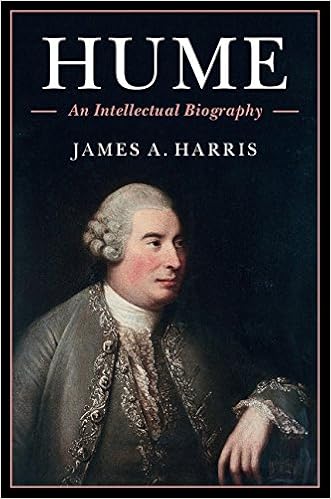
— James A. Harris. Hume. An Intellectual Biography. Cambridge University Press, 2015 [review] [VIDEO].

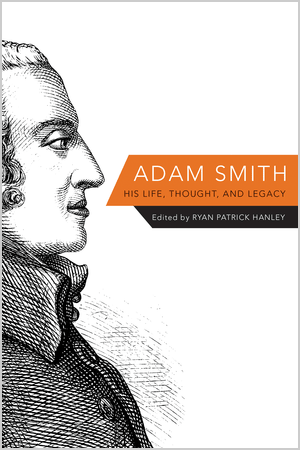
— Ryan Patrick Hanley (ed.). Adam Smith. His Life, Thought, and Legacy. Princeton University Press, 2016.

— Dennis C. Rasmussen. The Infidel and the Professor. David Hume, Adam Smith and the Friendship that Shaped Modern Thought. Princeton University Press, 2017.

                                                                   * * *

"The Scottish Enlightenment is now widely regarded as an intellectual golden age, the rival of Periclean Athens, Augustan Rome, and Renaissance Italy". So writes Dennis Rasmussen in the introduction of his book on the friendship between two intellectual giants: David Hume (1711-1776) and Adam Smith (1727-1790). Horace Walpole declared that Scoltand was "the most accomplished nation in Europe"—and that was in 1758, before the publication of Smith's books and of Hume's final volumes of the History of Great Britain. The three books surveyed here allow us to understand the enormous impact of these two great Scottish thinkers. And although they have very different formats and a different target audience, they complement each other well.

Adam Smith: His Life, Thought, and Legacy
The most striking fact about the volume edited by Ryan Patrick Hanley is its innovative format. Instead of a dozen or so articles on different aspects of Smith's writings, the book contains no less than thirty-two short contributions that span a surprisingly wide range of topics like finance, politics, history, behavioral economics, economic development, freedom, justice, rhetoric, enlightenment studiesand even feminist ethics and corporate governance. Each article includes its own bibliographical essay, which I found especially useful. Rather than a detailed review of each section, I will concentrate on some of the aspects that I found most striking and interesting. Most of my comments are based on my reading of the Wealth of Nations, as I have read only parts of TMS, RJ and LBLR.

First, I am delighted to note the emphasis on security as a pillar of Smith's thought. Does that reflect the impact of my blog posts on the matter? (1, 2, 3). I don't rule that out, as I remember an earlier email discussion on this very topic with Nicholas Phillipson, who pens the piece on "Smith and the Scottish Enlightenment" (pp. 105-119). There are some very good quotes on the importance of security throughout the book: "Security is the first and the principal object of prudence" (TMS, p. 143). Writing on WN, Jerry Evensky concludes: "Thus in Smith's analysis security is the sine qua non of the dynamic of accumulation, investment, and growth" (p. 74). In a little known work on The History of Astronomy discussed by Craig Smith, Adam Smith states that only when "order and security" have been established can scientific endeavour flourish (p. 95).


Maria-Pia Paganelli, whom I had the pleasure to meet at the Colloque International Économie et Politique chez Ferdinando Galiani (Lyon 2015) [see], writes on "Adam Smith and the History of Economic Thought: the Case of Banking" (pp. 247-261). She does not deal with Smith's (difficult) pages on the Amsterdamse Wisselbank, the 'mother' of central banks. In the midst of the Eurozone crisis, back in 2011, I suggested that Smith's views on the Bank of England were particularly useful, as he takes note (in WN) of the contrast with France, a country without the equivalent of that money-printing institution, a central bank all but in name [see]. There is no shortage of analysis on the broad topic of Adam Smith and justice. In that regard, I particularly liked the pieces by Nicholas Wolterstorff, Chad Flanders and Lisa Hill. But what is the foundation of security and justice? I will never tire of quoting Smith's remarquable passages on what we nowadays call 'judicial independence' in LBLR [see] and WN [see].

There is no mention of these passages in the book. Yet I think they provide the key to Smith's système as a whole. Consider Lisa Hill's quote about the beneficial impact, in social terms, of high wages ("Adam Smith and Political Theory", p. 334). In Book I of WN, Smith makes it clear that high wages are a function of the low cost of capital—which depends on the security of possessions, which in turn depends on ... judicial independence! While it would be unfair not to mention other articles, I must say that I particularly liked the contributions of Michaël Biziou's on "Adam Smith and the History of Philosophy" (pp. 423-442) and of Frederik Albritton Jonsson on "Adam Smith and Enlightenment Studies" (pp. 443-458). And, as a lecturer on Finance, I was pleasantly surprised to find John Bogle —the innovator who launched the 'passive asset management revolution'— as the author of a piece on Smith and shareolder capitalism (pp. 525-541).

Hume: an Intellectual Biography
This is the most difficult, and the most rewarding, of the three books presented here. James A. Harris is Reader in the History of Philosophy at the University of St. Andrews. His book is an intellectual biography of David Hume—as such, it contains little information on Hume's life itself, unless a particular biographical episode helps to explain an idea. The book is an amazing tour de force. Skilfully guiding the reader through the chronology of Hume's publications, Mr. Harris manages to cover all aspects of Hume's thought: the theory of knowledge, history, economics, politics and religion. I can say little on the theory of knowledge. However, I will venture this: Hume may be a very relevant author for those who seek to know more about the meaning of Big Data, algorithms and Artificial Intelligence. What is Big Data if not the numerical expression of 'experience and observation' as defined by Hume? Mabye I'll come back to that point later on in the blog (I need to do more reading!).

But let me mention the parts of the book that deal with politics and history. The key elements are to be found between pages 331 to 340 and 385 to 433. Hume updates Polybius's anacyclosis —the theory that explains how mixed regimes can temporarily avoid decline— by incorporating two modern elements: on the one hand, commerce and the increasing importance of property rights (here Harrington is a key source); on the other hand, the balance of power at the international level. These pages are absolutely fascinating. Following Polybius, Hume decries the lack of authority as the key threat to stability, and as the leading cause of tyranny. However, an excess of authority is bound to suppress freedom, causing as much damage. Mr. Harris quotes Hume himself: "In all government, there is a perpetual intestine struggle, open or secret, between AUTHORITY and LIBERTY; and neither of them can ever absolutely prevail in the contest".


For Hume, defined by Mr. Harris as "the scientist of politics", two apparently contradictory ideas —absolutism and 'libertarianism'— need to be combined in order to achieve stability and prosperity. The chapters of the History dealing with the revolutions of the XVIIth century provide a brilliant illustration of this idea. In fact, I would argue that Hume's debt to Polybius is enormous, a point that requires more research. As Mr. Harris indicates several times, Hume went back periodically to his Latin and Greek sources, and Polybius features repeatedly in his essays. Hume's tremendous success as an author was due to the fact that he avoided being pinned down either as a tory or a whig historian. His deep knowledge of classical authors served him well in that regard. (Time permitting, I will write a longer review of Hume: An Intellectual Biography in coming weeks).

The Infidel and the Professor
Unlike the previous two books, The Infidel and the Professor is about a story. And that story is the friendship between David Hume (the Infidel) and Adam Smith (the Professor). Dennis C. Rasmussen, an associate professor of political science at Tufts University, takes us through the subtle points of disagreement between Hume and Smith: the advantages of the commercial society (with DH more sanguine on this point), religion, happiness and work, the drawbacks of inequality, etc. There is more material on the importance of security, especially on pages 162 and 163. (Again: did my own blog posts launch that discussion?). Yet, Smith's passage on judicial independence as the foundation of security remains unquoted. The parts on Hume's theory of knowledge and on the ill-fated encounter between Hume and Rousseau are very good.
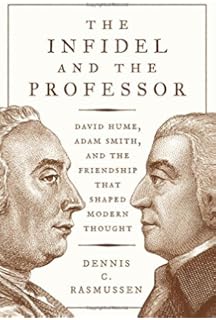

Mr. Rasmussen devotes a great deal of attention to the brouhaha surrounding Hume's death. Again, the story is very well told—and the annex of the book is very helpful in that regard. Books like this are especially useful because most readers are naturally attracted to stories. And if the story is compelling enough —as is the case here— the reader is likely to come back for more: perhaps an intellectual biography first, and then the writings of Hume and Smith themselves. So we've come full circle. One point that I found wanting in the books reviewed here (especially the first and the third) is more analysis of the relationship between DH/AS and French philosophes. Both were admirers of Montesquieu, and both nurtured deep friendships with the likes of d'Alembert, Turgot, Helvétius and d'Holbach, to name but a few. Smith himself made the journey to Geneva to meet Voltaire. Yet there is no mention of the impact of Raynal's Histoire des deux Indes on WN; and Mr. Harris appears to describe Condorcet's Esquisse as a contemporary work (it was published in 1794).
_________________

Monday, April 4, 2016

CUADERNOS DE JOHN ADAMS, No. 39

AM | @agumack

"Checks and balances are our only security" — John Adams

[1] Luís Amiguet. Otra buena entrevista de Lluís Amiguet en 'La Contra' de La Vanguardia. El entrevistado es Carlos Sebastián, catedrático de Teoría Económica, autor de España estancada (*). No tengo la menor duda: ¡el Sr. Sebastián lee Contrapesos! En términos levemente diferentes, se refiere a la cultura política 'tribal' típica de países con débiles contrapesos institucionales:

España es aún un Estado neopatrimonialista clientelar. Los partidos han colonizado la administración y la han hecho aún más grande e ineficiente. Nuestra cultura acepta que cada partido tenga su grupo de clientes y amigos y les favorezcan a cambio de su apoyo. Lo vemos hasta natural. El rigor y la independencia deberían ser contrapoder del interés partidista (en la justicia). 

¡Claro que sí! Es exactamente la idea de Francis Fukuyama, tal como la presenté en 2011 [ver]. El Sr. Sebastián también se refiere a la necesidad de dar prioridad al cambio institucional con respecto a 'la educación'—lo contrario equivaldría a exacerbar la fuga de cerebros y a subsidiar a países más ricos, como comenté en esta entrada. Finalmente, el entrevistado afirma que "reformando nuestras instituciones hasta darles la calidad, digamos, de las suecas, España progresaría como Suecia". ¿Suena conocido? ¡Excelente!

(*) "Con instituciones como las suecas, España progresaría como Suecia", La Vanguardia, 4 de abril de 2016.
_____________

[2] Carlos Pagni. Poco a poco los analistas y periodistas argentinos van señalando la gravedad del caos en el sistema judicial. El sábado fue el turno de Jorge Lanata en Clarín [ver]: "El principal problema de la Argentina es la Justicia. En realidad, la ausencia de ella." El Sr. Lanata establece una equivalencia entre corrupción y mal funcionamiento de la justicia, tema habitual en Contrapesos. (Esta equivalencia aparece en la obra de un tal ... Cornelius Tacitus: 1, 2). Ahora le toca a Carlos Pagni (*). El periodista de La Nación muestra cómo el gobierno de Mauricio Macri opta por dejar intacto el descalabro kirchnerista, incluyendo los (in)famosos 'operadores' del poder ejecutivo en la justicia. Macri, señala Pagni, no capta la importancia del desbarajuste institucional de la Argentina. Un verdadero desastre, que señalé a comienzos de este año en el blog [ver]. Pero todavía nos falta entender mejor el vínculo entre la ausencia de contrapesos y el alto costo del capital. Si el liderazgo político no entiende esta relación, nada cambiará. Y la tasa de interés, decía con brillo el embajador Leopoldo Tettamanti, es el "el talón de Aquiles de la economía argentina".

(*) Carlos Pagni: "La impunidad, una amenaza para Macri", La Nación, 4 de abril de 2016.
 
 ______________

[3] Smith. Ya mencioné muchas veces los escritos de Adam Smith sobre el vínculo entre la abundancia de crédito y la calidad del sistema judicial. El propio Smith lo dice: para explicar la prosperidad de un país, la independencia judicial es más importante que la libertad comercial (1, 2, 3, 4). Releo estas entradas y noto que no había mencionado este texto (WN, V.III.5) (*):

Commerce and manufactures can seldom flourish long in any state which does not enjoy a regular administration of justice, in which the people do not feel themselves secure in the possession of their property, in which the faith of contracts is not supported by law, and in which the authority of the state is not supposed to be regularly employed in enforcing the payment of debts from all those who are able to pay. Commerce and manufactures, in short, can seldom flourish in any state in which there is not a certain degree of confidence in the justice of government.

El capítulo continúa con la referencia al (alto) valor de los títulos públicos en países que gozan de una "universal confidence in the justice of the state". Smith se refiere explícitamente a la oferta de crédito: "...the inclination or willingness in the subjects of a commercial state to lend". Pero no Mack, la oferta de crédito no tiene nada que ver con la calidad del sistema judicial.

(*) Adam Smith. An Inquiry into the Nature and Causes of the Wealth of Nations [1776]. London: Methuen & Co., 1904.
_________________

Friday, February 12, 2016

CUADERNOS DE JOHN ADAMS, No. 33

AM | @agumack

"Checks and balances are our only security" — John Adams

[1] Adam Smith. Compré ayer, en la magnífica librería Alibri en Barcelona (Balmes 26) esta 'guía' de lectura de Adam Smith, editada por Ryan Patrick Hanley (*). Hay 32 artículos cortos que cubren prácticamente todos los aspectos del pensamiento de Smith. Iré ofreciendo mini-reseñas de los más interesantes. Por lo que veo, ninguno de los autores enfatiza la seguridad —basada en la independencia judicial—como criterio de la prosperidad y del costo del capital. Los lectores de Contrapesos saben que ése es mi punto de vista (1, 2). Ésta es mi hipotesis: todos los autores enseñan en Universidades de EEUU y Europa. En consecuencia, dan por sentado un regimen institucional basado en la seguridad y estabilidad de las posesiones (incluyendo el tenure de jueces). Pero Smith era escocés—y entendía las diferencias institucionales entre Escocia e Inglaterra. Por eso creo que la mejor manera de entender a Adam Smith es ... pasar una temporada en países 'emergentes'.

(*) Ryan Patrick Hanley. Adam Smith. His Life, Thought and Legacy. Princeton University Press, 2016. 
______________

[2] China. Hay cada vez más evidencia sobre: (1) la amplitud de la fuga de capitales; (2) el giro autoritario del gobierno de Xi Jinping. Macarena Vidal Liy, analizando la "acumulación de poder", piensa que Xi pretende ser visto como "el Mao del siglo XXI" [ver]. Heather Timmons cita la cifra de $676 billion en fuga de capitales en 2015 [ver]. Lo cierto es que la desaparición de personas forma parte de la vida cotidiana—incluso en Hong Kong: "Beijing is believed to have abducted several Hong Kong booksellers, and forced the public 'confessions' of two Swedish citizens on Chinese television and the ejection of one from China. The government is also believed to be behind two Chinese citizens being 'disappeared' from Thailand [...] Chinese political risk is now in the center of investors' radar screens." La hiper-inseguridad está agravando la fuga de capitales. Sin confianza sobre la vida, la libertad y las posesiones, China no pasará de periferia exportadora a centro de innovación. Lo resume de manera genial el empresario Willy Lin: sus fábricas no pueden pasar de la exportación al mercado interno porque "credit risk is too high, especially in the current climate" (*). ¿Contrapesos y costo del capital, anyone?

(*) Ben Bland: "China manufacturing: adapt or die", Financial Times, 4 de noviembre de 2015.
_______________

[3] Inversores pasivos. Parece lógico pensar que el auge de los inversores bursátiles 'pasivos', que indexan sus posiciones a distintos índices de acciones, tiene que coincidir con una menor calidad de la gobernanza en las empresas. Dada su actitud pasiva —por definición, nunca amenanzan con vender sus acciones— estos inversores no monitorean la calidad del 'management'. No es así (*). Según Ian Appel, Todd Gormley y Donald Keim, el impresionante 'boom' de fondos indexados lleva a mejoras en la calidad de la gobernanza:

To examine whether and by which mechanisms passive investors influence firms’ governance, we exploit variation in ownership by passive mutual funds associated with stock assignments to the Russell 1000 and 2000 indexes. Our findings suggest that passive mutual funds influence firms’ governance choices, resulting in more independent directors, removal of takeover defenses, and more equal voting rights. Passive investors appear to exert influence through their large voting blocs, and consistent with the observed governance differences increasing firm value, passive ownership is associated with improvements in firms’ longer-term performance.

 (*) Ian Appel, Todd A. Gormley & Donald B. Keim: "Passive Investors, not Passive Owners", Journal of Financial Economics, Febrero de 2016.
_______________

Tuesday, July 15, 2014

CUADERNOS DE JOHN ADAMS, No. 3


AM | @agumack

"Checks and balances are our only security" — John Adams

[1] Nigeria. John Adams comienza su notable Defence of the Constitutions of the United States (1787) con una crítica a Tucídides. El historiador ateniense relata con lujo de detalles las masacres en las ciudades griegas, pero enoja a Adams al desconocer el remedio contra la violencia: el equilibrio político. "Such things ever will be, says Thucydides, so long as human nature continues the same. But if this nervous historian had known a balance of three powers, he would not have pronounced the distemper so incurable, but would have added — so long as parties in cities remain unbalanced".

* * * 

Recordé este texto al leer una crónica de los recientes episodios de violencia en Nigeria (*). En lo que va del año se mulitiplicaron los ataques a pueblos y los secuestros de niñas para ser vendidas como esclavas; hay más de dos mil asesinatos. Tímidamente, el Financial Times menciona la mala calidad de la gobernanza. Y luego viene esta cita de Fatima Aliku, asesora del gobierno en temas de seguridad y terrorismo, sobre Abubakar Shekau, el líder del grupo terrorista-islamista Boko Haram: "Shekau doesn't have checks and balances. He unleashed this amazing level of terror in an act of vengeance for the killing of the leader. He doesn't have brakes."

(*) William Wallis: "Beyond reason", Financial Times, 10-11 de mayo de 2014.
_______________

[2] Smith. Tomando té con pan con tomate esta mañana en Gena's, me di el gusto de releer el excelente pasaje de la Riqueza de las Naciones (v.iii.4) sobre el crédito público. Adam Smith establece un vínculo explítico entre lo que llama inclination or willingness to lend (término que adoptará J. Stuart Mill) y la confianza en la justicia del gobierno. Y no se refiere solamente al crédito público: "The individuals, who hoard whatever money they can save, and who conceal their hoard, do so from a distrust of the justice of government".

Es decir: la oferta de crédito depende de la percepción sobre la confianza que inspira la justicia. Lo dice Smith—no estoy inventando nada. No hay referencias al gasto público o al deficit fiscal en esta frase. (El asunto, creo yo, está sobre-entendido: si hay confianza en la calidad de la justicia, lo más probable es que el buen gobierno se extienda al terreno fiscal). Es fácil ver en estas líneas la influencia de François Bernier (1, 2, 3, 4) y tal vez de Ferdinando Galiani [ver].
 
_______________ 

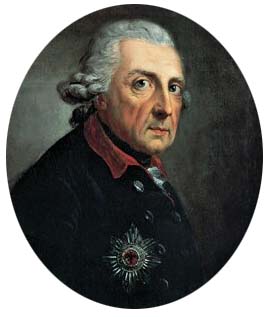
[3] Federico II. A comienzos de 1789, Thomas Jefferson le anuncia a James Madison el envío de libros de Jean-Jacques Barthélemy [ver], del marqués de Condorcet y ... del rey de Prusia Federico II (1712-1786). Éste último es un personaje interesante desde el punto de la historia de las instituciones. Además de estadista, era un intelectual amigo de La Mettrie, Voltaire, d'Alembert y otros filósofos y científicos. Escribió mucho—casi todo en francés. Este déspota ilustrado tenía claro un punto en particular: sin una justicia eficaz e imparcial, predominará ... el caos. Espero tener tiempo para comentar algunos casos. Ésta es solo un cita, en la cual el rey menciona los "servicios" que aporta al país, y que constituyen su deber:

On peut être utile à sa patrie, en élevant ses enfans avec les principes de bons citoyens et d'honnêtes gens, en perfectionnant l'agriculture dans ses terres, en administrant la justice équitablement et avec impartialité, en maniant les deniers publics avec désintéressement, en tâchant d'illustrer son siècle par ses vertus ou par ses lumières. Voilà mes devoirs (*).

(*) Œuvres complètes de Fréderic II, roi de Prusse, Tomo 7, 1790, p. 249 [ver].

 ________________

Sunday, May 12, 2013

LECTURAS DE ADAM SMITH (I)
"Monopoly, besides, is a great enemy to good management" — Adam Smith

AM | @agumack

Esta mini-entrada es un anticipo de una serie de notas sobre la Riqueza de las Naciones. Estoy a doscientas páginas de terminar este libro enorme y difícil. Si mis clases me dan tiempo, intentaré ofrecer una selección de pasajes comentados. Sobre el final del capítulo sobre la renta de la tierra (Libro I, capítulo 11, parte 1), Smith evalúa el retorno sobre la inversión en plantaciones en las "colonias de azúcar", comparado con el retorno sobre la inversión en Escocia, Irlanda y Norteamérica:

...notwithstanding the great distance and the uncertain returns, from the defective administration of justice in those countries. Nobody will attempt to improve and cultivate in the same manner the most fertile lands of Scotland, Ireland, or the corn provinces of North America, though from the more exact administration of justice in these countries, more regular returns might be expected.

Ahí lo tiene. Cuando la justicia es defective, los retornos son uncertain. Cuando la justicia funciona normalmente, los retornos son más fáciles de prever. ¿Tasa de descuento e imperio de la ley, anyone?
____________

Saturday, March 9, 2013

EL ECONOMISTA DE LA SEGURIDAD
"...the judicial should be separated from the executive power..." — Adam Smith

AM | @agumack

Estoy en plena lectura/re-lectura de los Libros III y IV de la Riqueza de las Naciones. No es una tarea fácil: el capítulo sobre el Banco de Ámsterdam en el Libro IV, por ejemplo, requiere muchísima atención, además de conocimientos (que me faltan) sobre el sistema financiero de la época. El punto que quiero destacar hoy es el siguiente: Adam Smith no es el "economista del libre-cambio" como se dice habitualmente es el economista de la seguridad de las posesiones. Entre las páginas 408 y 598 de mi edición de la Modern Library, las palabras security, secure y secured aparecen ... 38 veces.

* * *

Smith defiende el sistema del libre-cambio, pero con varios puntos en mente. Primero: hay situaciones en las que la "seguridad de Inglaterra" o la "defensa de un país" justifica regulaciones opuestas al perfect freedom of trade (se refiere en particular al Navigation Act de 1660). Segundo: los comerciantes y los hombres de negocio no siempre salen bien parados en el libro  son "corporaciones" llenas de "sofistas" cuya actividad debe ser regulada en beneficio de toda la comunidad. El principal criterio de Smith es siempre el mismo: se trata de promover el uso más eficiente del stock de capital de un país, para que crezcan los ingresos de la población.

Pero ahora viene lo más interesante. Después de una larga descripción de los inconvenientes causados por trabas a importaciones y exportaciones, impuestos a la importación y subsidios y reembolsos a la exportación, Adam Smith analiza el principal criterio de la prosperidad de un país. No hay ninguna duda: "That security which the laws give to every man that he shall enjoy the fruits of his own labour ... this security ... freedom and security" (IV.5). Gran Bretaña puede tener un comercio libre o semi-libre: pero esta es una consideración menos importante que la seguridad de las posesiones.

Aún si España y Portugal lograran el régimen comercial más libre que fuera posible imaginar, sus instituciones políticas serían incapaces de crear "freedom and security": Industry is there neither free nor secure (IV.5) (Por industry Smith se refiere a la actividad económica en general). El punto ya había sido mencionado en III.2: la seguridad de la tenencia —tierra, capital, posesiones— es lo que explica la prosperidad económica de Inglaterra, mucho más que "all their boasted regulations of commerce taken together".

¿Pero de dónde viene la seguridad?
¿De dónde viene la seguridad? Este punto ya fue mencionado en Contrapesos. Pero no tengo ningún problema en repetirlo — lo haré muchas veces. La seguridad sobre la vida, la libertad y las posesiones viene de ... la independencia judicial. Se trata, a mi criterio, del pasaje más importante de toda la Riqueza de las Naciones. Aquí va, una vez más:

When the judicial is united to the executive power, it is scarce possible that justice should not frequently be sacrified to, what is vulgarly called, politics. The persons entrusted with the great interests of the state may, even without any corrupt views, sometimes imagine it necessary to sacrifice to those interests the rights of a private man. But upon the impartial administration of justice depends the liberty of every individual, the sense which he has of his own security. In order to make every individual feel himself perfectly secure in the possession of every right which belongs to him, it is not only necessary that the judicial should be separated from the executive power, but that it should be rendered as much as possible independent from that power.

Libertad, seguridad, independencia judicial: todos sinónimos en el léxico de Adam Smith (*). ¡Bingo! Si pensamos en la situación de la Argentina en base a estos textos, estamos en ... el peor de los mundos. A las trabas al comercio imaginadas por el (des)gobierno de CFK debemos añadir la cada vez más precaria situación de materia de (in)seguridad. Dados los planes sobre la (des)organización del sistema judicial, la cosa no pinta nada bien.
_____________

(*) Mariano Moreno y los hombres de Mayo tenían muy claro el vínculo entre seguridad e independencia judicial [ver]. En notas manuscritas de Moreno leemos: "La potestad judicial debe hallarse del todo separada de la corona. Si la Justicia se ejerciera desde el Trono, no habría seguridad real ni personal alguna". El pasaje está tomado de Victorian de Villava, con probable inspiración en Raynal-Diderot o Adam Smith. (Notas sobre los Apuntes para la reforma de España de Victorian de Villava, 1797, en Eduardo Dünrhöfer. Mariano Moreno. Buenos Aires: Dunken, 2000, pp. 209-213). Ver otras referencias de Mariano Moreno a la seguridad. [Agregado, 11 de marzo: esta entrada dedicada al capítulo 7 del Libro IV enfatiza la idea de Smith.]

Saturday, April 28, 2012

VILLAS-MISERIA
"...the equal and impartial administration of justice" — Adam Smith 

AM | @agumack

Gillian Tett, la versátil periodista del FT que cubrió con brillo el auge y ocaso de la innovación financiera entre 2003 y 2008, escribe sobre el trabajo de Hernando de Soto en Egipto (*). Me encanta la tesis principal del Sr. De Soto: sin títulos de propiedad universalmente reconocidos, los habitantes de las villas-miseria no pueden acceder al crédito, porque sus activos (posesión) no actúan como capital (propiedad). Por esta razón, la escala de sus negocios siempre será muy limitada. Excelente. Pero hay un problema, bien señalado por Jean-Louis van Gelder (especialista en villas argentinas) [ver]: la obtención de títulos formales no aseguraría gran cosa, si la propiedad en general fuera frágil e inestable.

* * *

En definitiva, tanto para las villas como para Usted y yo, el problema sigue siendo la forma de gobierno. Si ésta es despótica o despótica soft, no habrá seguridad sobre las pertenencias. Por eso Gillian Tett recuerda, con excelente criterio, a Adam Smith: "...unless people feel confident that they truly own assets, with legal security, transparency and a sense of inclusion, it is well-nigh impossible to build a stable market economy". Para el economista escocés, la única manera de lograr esta seguridad es con ... independencia judicial. Este es el inmortal pasaje de la Riqueza de las naciones, varias veces citado en Contrapesos (y lo seguiremos citando):

When the judicial is united to the executive power, it is scarce possible that justice should not frequently be sacrified to, what is vulgarly called, politics. The persons entrusted with the great interests of the state may, even without any corrupt views, sometimes imagine it necessary to sacrifice to those interests the rights of a private man. But upon the impartial administration of justice depends the liberty of every individual, the sense which he has of his own security. In order to make every individual feel himself perfectly secure in the possession of every right which belongs to him, it is not only necessary that the judicial should be separated from the executive power, but that it should be rendered as much as possible independent from that power.

Cuando el poder ejecutivo controla el poder judicial, no hay ni puede haber seguridad de ningún tipo — ni jurídica, ni física. Camine un par de cuadras en Copenhagen y en El Cairo, y lo entenderá en pocos minutos.

(*) Gillian Tett: "Savvy Brotherhood will be alluring for the west to watch", Financial Times.
________________